



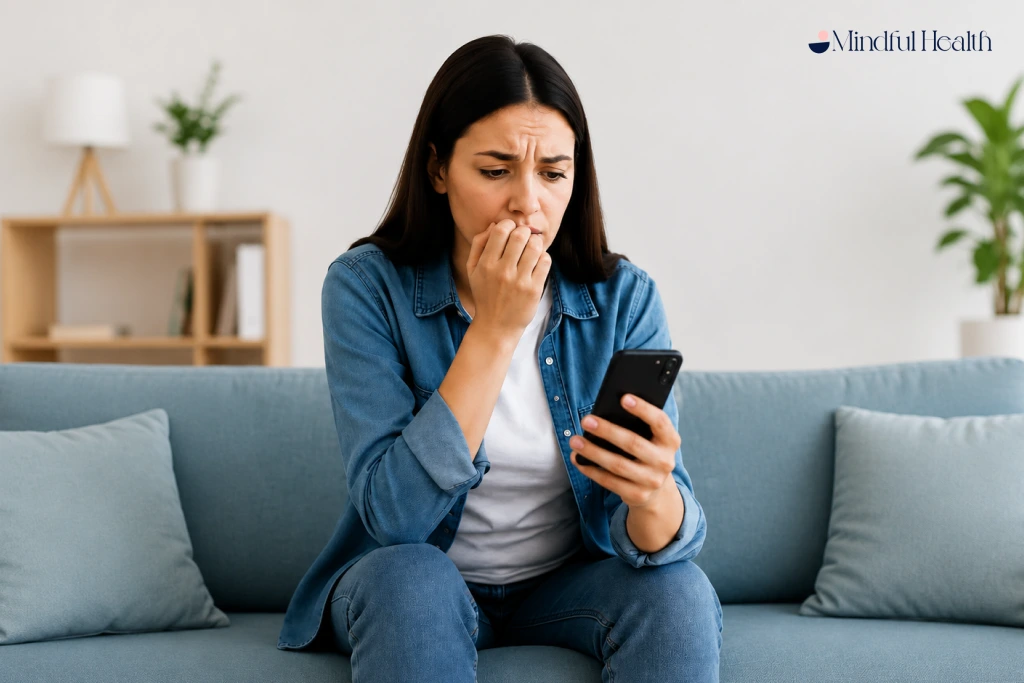
Nomophobia, short for “no mobile phone phobia,” refers to the anxiety, discomfort, or distress some individuals experience when they are without their phone or unable to stay digitally connected.
In simple terms, it describes feelings of uneasiness or fear that may arise when someone cannot access their phone, communicate with others, or connect online. With smartphones playing such a significant role in everyday life, excessive dependence on them has become a growing behavioral and mental health concern.
Occasional concern about losing your phone or being unable to use it can be normal. However, when someone experiences persistent anxiety about phone access, repeatedly checks the screen, or finds it difficult to function without the device, these behaviors may indicate nomophobia.
Understanding the signs, potential causes, and available treatment approaches can help individuals recognize problematic phone dependence and take steps toward healthier technology use.
What Is Nomophobia?
Nomophobia has not been officially classified as a psychological disorder in the DSM-5. However, this does not mean that the concerns associated with it are insignificant. Mental health experts increasingly recognize problematic smartphone dependence as a behavioral and psychological concern.
Nomophobia generally refers to an excessive fear or anxiety associated with being without a mobile phone. This may occur when a phone is lost, the battery runs out, there is no network signal, or a person cannot communicate or access information online.
For many people, smartphones provide connection, information, entertainment, and a sense of security. When access to the device is suddenly interrupted, some individuals may experience significant anxiety or emotional distress.
How Common Is Nomophobia in Today’s Smartphone-Driven World?
Nomophobia may be more common than many people realize. Research suggests that many smartphone users experience at least some signs of anxiety or discomfort when separated from their devices, while a smaller percentage may experience more significant symptoms.
Smartphones now play an important role in communication, work, education, entertainment, navigation, and maintaining social connections. As a result, suddenly losing access to these functions can feel stressful.
Feeling attached to your phone does not necessarily mean that you have nomophobia. However, when that attachment begins to cause significant fear, compulsive behavior, or interference with daily life, it may be worth addressing.
Common Symptoms of Nomophobia
Symptoms can vary from person to person and may range from mild discomfort to more significant emotional distress.
Anxiety When Separated From a Phone
Individuals experiencing nomophobia may feel anxious, uneasy, or distressed when their phone is not nearby, even for a relatively short period.
The reaction may involve more than simple inconvenience and can create a strong urge to regain access to the device.
Compulsive Phone Checking
Some individuals repeatedly check their phones without a specific reason, even when they do not expect new messages or notifications.
Over time, this behavior may become habitual or feel almost automatic.
Fear of Losing Connectivity
Losing Wi-Fi, having no mobile signal, or being unable to access social media or other online services may cause significant distress for some individuals.
Instead of viewing the interruption as a temporary inconvenience, they may experience excessive worry or anxiety.
Difficulty Concentrating
Constant attention to phone notifications, social media updates, messages, or the possibility of missing something can make it more difficult to concentrate.
This may interfere with work, school, conversations, or other activities that require sustained attention.
Sleep Disturbances
Some people keep their phones close while sleeping and repeatedly check them throughout the night.
Frequent nighttime phone use can interfere with healthy sleep routines and make it more difficult to get adequate rest.
Emotional Distress
Being unable to access a phone may contribute to irritability, restlessness, nervousness, or significant anxiety in some individuals.
What Causes Nomophobia?
There is no single cause of nomophobia. Instead, several behavioral, emotional, and environmental factors may contribute to excessive smartphone dependence.
Dependence on Digital Communication
For many people, smartphones are their primary way of communicating with family members, friends, coworkers, and others.
When someone relies heavily on their phone for social connection, losing access to the device may create feelings of isolation or anxiety.
Fear of Missing Out (FOMO)
Social media can contribute to a persistent fear of missing important updates, conversations, events, or experiences.
Seeing other people sharing activities and social experiences online may increase the urge to remain constantly connected.
Social Validation
Likes, comments, messages, and other forms of online interaction can provide a brief sense of recognition or validation.
For some individuals, repeatedly seeking this response may contribute to frequent or compulsive phone use.
Anxiety and Stress
People who already experience anxiety or significant stress may use their phones as a source of distraction, reassurance, or comfort.
Over time, relying on a smartphone to manage uncomfortable emotions may strengthen emotional dependence on the device.
Habitual Technology Use
Years of repeatedly checking a smartphone throughout the day can create strong behavioral habits.
Eventually, reaching for the phone may become automatic, even when there is no specific reason to check it.
How Nomophobia Affects Mental Health and Daily Life
Smartphones themselves are not inherently harmful and can provide many practical benefits. However, excessive reliance on a smartphone may begin to affect other areas of daily life.
Individuals experiencing problematic phone dependence may experience:
- Increased stress and anxiety
- Reduced productivity
- Difficulty maintaining focus
- Poor sleep quality
- Social withdrawal
- Reduced face-to-face interaction
- Increased emotional dependence on technology
When these patterns continue over time, they may affect overall well-being, relationships, work, school, and everyday functioning.
Treatment Options for Nomophobia
Problematic smartphone dependence can be addressed through practical behavioral strategies and, when needed, professional mental health support.
Cognitive Behavioral Therapy (CBT)
Cognitive Behavioral Therapy (CBT) may help individuals identify thoughts and behaviors that contribute to excessive phone dependence.
Therapy can also help people develop healthier coping strategies for managing anxiety, stress, discomfort, and the urge to repeatedly check their devices.
Digital Usage Awareness
Becoming more aware of smartphone habits can be an important first step.
Many smartphones include built-in screen-time or digital well-being tools that show information such as:
- Total daily screen time
- Number of phone pickups
- Time spent using individual apps
- Notification frequency
Reviewing these patterns may help individuals recognize areas where they want to reduce or modify their phone use.
Gradual Reduction of Phone Dependence
Rather than stopping smartphone use abruptly, gradually reducing unnecessary use may be more manageable for some individuals.
Helpful strategies may include setting specific periods when the phone is put away, limiting unnecessary notifications, or creating phone-free routines during meals, conversations, or bedtime.
Mindfulness and Stress Management
Mindfulness can help individuals become more comfortable experiencing temporary discomfort without immediately reaching for their phones.
Relaxation techniques, breathing exercises, meditation, and other stress-management strategies may also help reduce the urge to rely on a device for reassurance or distraction.
Addressing Underlying Mental Health Conditions
Sometimes excessive phone dependence may occur alongside conditions such as anxiety, depression, ADHD, OCD, or other mental health concerns.
When an underlying condition contributes to problematic technology use, addressing that condition may be an important part of treatment.
Professional Therapy and Support
A mental health professional can help individuals explore the emotional and behavioral factors contributing to excessive phone use.
Therapy may also help develop a personalized plan for establishing healthier technology habits, managing anxiety, and improving overall emotional well-being.
Conclusion
Smartphones are an important part of modern life, and using them regularly is not necessarily a problem. However, there is a difference between frequently using a phone and feeling unable to function comfortably without it.
If anxiety related to phone access begins to interfere with your emotions, sleep, concentration, relationships, work, or daily activities, it may be worth taking a closer look at your technology habits and considering professional support.
Mindful Health offers a range of mental health services, including therapy, psychiatric care, medication management, Intensive Outpatient Programs (IOP), and Partial Hospitalization Programs (PHP).
Through personalized mental health support, Mindful Health helps individuals address nomophobia-related concerns, underlying emotional challenges, and unhealthy behavioral patterns while developing healthier coping strategies for long-term well-being.
