



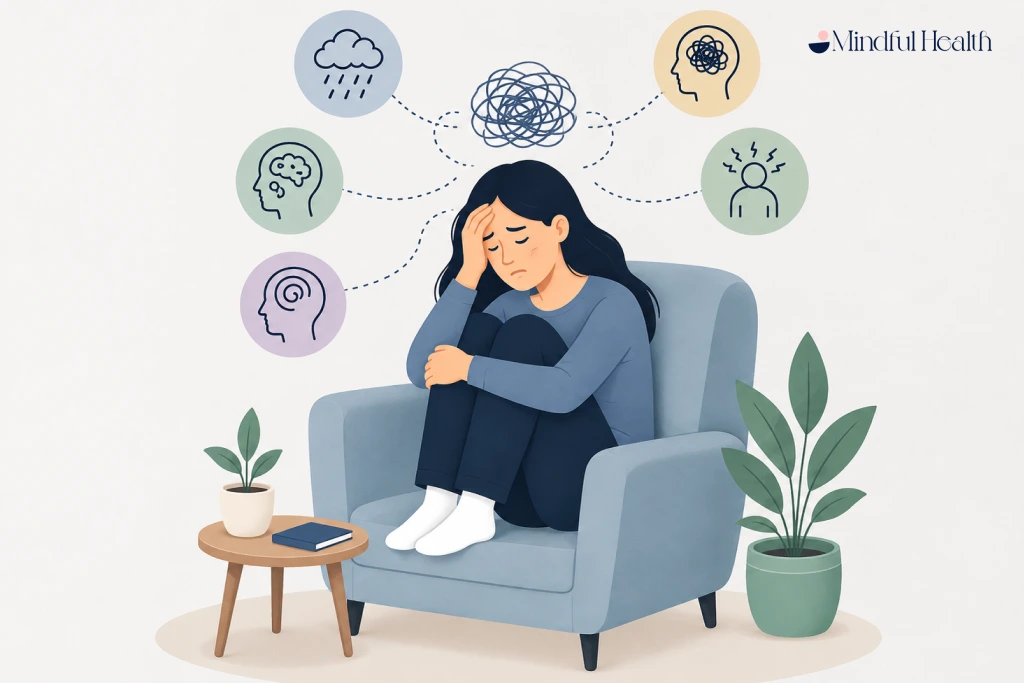
Anxiety often occurs alongside other mental health conditions. For many people, it may be accompanied by depression, ADHD, OCD, PTSD, or a substance use disorder that developed partly as a way of coping with emotional distress.
When multiple conditions are present, symptoms can overlap and make it more difficult to understand what is happening and what type of treatment may be appropriate. Living with several mental health concerns at the same time can also be emotionally exhausting and may make everyday responsibilities feel more difficult to manage.
Understanding how anxiety can interact with other mental health conditions is an important step toward finding treatment that addresses the full range of symptoms rather than focusing on only one part of the problem.
Understanding Anxiety and Co-Occurring Conditions
When someone experiences anxiety alongside one or more additional mental health conditions, these are often referred to as co-occurring or comorbid conditions.
These conditions may develop independently. In some cases, they may share similar biological, psychological, or environmental risk factors or influence one another over time.
Diagnosis can become more challenging because many mental health conditions share overlapping symptoms. Sleep difficulties, problems concentrating, irritability, and social withdrawal may occur with anxiety, depression, ADHD, or PTSD.
Without a thorough evaluation, one condition may be treated while another continues to affect how a person feels and functions.
Common Mental Health Conditions Linked to Anxiety
Anxiety commonly occurs alongside other mental health conditions that can influence thoughts, emotions, behaviors, and everyday functioning.
Recognizing these connections may support a more comprehensive treatment approach.
Anxiety and Depression
Depression and anxiety frequently occur together.
Although they can appear different, anxiety may involve persistent worry, fear, and racing thoughts, while depression may involve low energy, sadness, hopelessness, and emotional withdrawal.
When both are present, the symptoms may intensify one another and make daily functioning more difficult.
Someone experiencing both anxiety and depression may have difficulty sleeping because of racing thoughts, struggle with low energy during the day, become more irritable, or have difficulty explaining why they feel emotionally overwhelmed.
Anxiety and ADHD
Attention-Deficit/Hyperactivity Disorder (ADHD) and anxiety can share several overlapping symptoms, which may complicate diagnosis.
ADHD can make it difficult to organize, prioritize, manage time, and follow through on responsibilities. These challenges may contribute to ongoing stress and feelings of anxiety.
People experiencing both conditions may deal with:
- Racing thoughts
- Difficulty concentrating
- Restlessness
- Feeling overwhelmed by daily responsibilities
- Emotional dysregulation
A comprehensive evaluation can help determine whether symptoms are related to ADHD, anxiety, or both.
Anxiety and OCD
Obsessive-Compulsive Disorder (OCD) can involve intrusive, unwanted thoughts and repetitive behaviors or mental rituals performed in an effort to reduce distress.
Common OCD symptoms may include:
- Excessive checking
- Repeated handwashing
- Fear of contamination
- Intrusive unwanted thoughts
- Repetitive mental rituals
Because anxiety and distress often accompany obsessive thoughts and compulsive behaviors, identifying the specific pattern of symptoms is important when developing an appropriate treatment plan.
Anxiety and PTSD
Post-Traumatic Stress Disorder (PTSD) may develop after exposure to a traumatic or deeply distressing experience, such as an accident, abuse, combat, or another event that caused an intense sense of danger or helplessness.
Anxiety can play a significant role in many PTSD symptoms.
People may experience:
- Hypervigilance
- Panic responses
- Sleep disturbances
- Flashbacks
- Avoidance behaviors
- Heightened emotional reactivity
These symptoms can significantly affect a person’s sense of safety and ability to manage everyday situations.
Anxiety and Substance Use Disorders
Some individuals may use alcohol, medications, or other substances in an attempt to temporarily reduce anxiety or emotional distress.
Although substances may provide short-term relief, continued use can create additional problems and may worsen anxiety over time, particularly during withdrawal.
Common challenges may include:
- Increased anxiety during withdrawal
- Dependence on substances for emotional relief
- Escalating substance use
- Difficulty coping without alcohol or drugs
When anxiety and substance use occur together, treatment may need to address both conditions as part of an integrated care plan.
Anxiety and Other Mental Health Conditions
Anxiety may also occur alongside bipolar disorder, eating disorders, panic disorder, social anxiety disorder, and certain personality disorders.
Each combination can affect individuals differently. Treatment should consider the complete pattern of symptoms rather than focusing only on the most visible concern.
Why Accurate Diagnosis Matters
When multiple mental health conditions are present, it can be difficult to determine which condition is responsible for particular symptoms.
Someone may spend months receiving treatment for anxiety and continue experiencing symptoms because another condition has not yet been identified.
A comprehensive evaluation can help clinicians better understand the complete clinical picture and develop a more appropriate treatment plan.
An accurate diagnosis can help in several important ways:
Prevent Misdiagnosis
Considering the full range of symptoms can help clinicians identify underlying or co-occurring conditions that may otherwise be overlooked.
This can support a treatment plan that addresses the individual’s actual needs rather than focusing only on the most obvious symptoms.
Improve Treatment Outcomes
Addressing co-occurring conditions through an integrated treatment plan may support more comprehensive and lasting improvement.
Treating related symptoms together can help individuals develop strategies that address multiple areas of emotional and behavioral health.
Support Long-Term Recovery
Comprehensive care can provide individuals with a stronger foundation for managing symptoms over time.
It may also help people recognize early warning signs, respond more effectively to difficult periods, and reduce the likelihood that unresolved symptoms continue to interfere with daily life.
Treatment Approaches for Anxiety and Co-Occurring Conditions
No single treatment approach is appropriate for everyone, particularly when multiple mental health conditions are involved.
Treatment is often most effective when it is tailored to the individual’s symptoms, history, needs, and goals.
Therapy and Counseling
Evidence-based therapies can help individuals better understand the factors contributing to their symptoms, identify unhelpful thought patterns, and develop healthier ways of managing difficult emotions.
Therapy may also help address relationship concerns, trauma, behavioral patterns, and other factors that contribute to anxiety and co-occurring conditions.
Psychiatric Evaluation and Medication Management
For some individuals, medication may provide meaningful symptom relief and support other parts of treatment.
A psychiatric evaluation can help determine whether medication may be appropriate based on the person’s symptoms, medical history, current medications, and treatment needs.
When medication is prescribed, ongoing monitoring can help evaluate effectiveness and manage potential side effects.
Intensive Outpatient and Structured Programs
When symptoms significantly interfere with daily functioning and weekly therapy is not enough, structured treatment programs may provide a higher level of support.
These programs can offer more frequent therapy, clinical monitoring, coping-skills development, and other services while allowing individuals to continue living at home when clinically appropriate.
Lifestyle and Wellness Support
Sleep, physical activity, nutrition, stress management, and consistent daily routines can all influence emotional well-being.
These strategies are not substitutes for professional mental health treatment, but they may complement therapy, medication, and other forms of care.
When to Seek Professional Help
Occasional anxiety can be a normal response to stress. However, persistent symptoms that interfere with daily life may require professional attention.
When anxiety occurs alongside depression, ADHD, OCD, PTSD, substance use, or other mental health conditions, a comprehensive evaluation may be especially helpful.
Consider reaching out to a healthcare professional if you experience:
- Constant worry, fear, or nervousness that is difficult to control
- Persistent sadness, hopelessness, or loss of interest in daily activities
- Intrusive thoughts or repetitive behaviors that disrupt daily functioning
- Difficulty concentrating, staying organized, or following through on responsibilities
- Panic attacks or intense emotional distress
- Sleep disturbances that continue for weeks or months
- Increasing reliance on alcohol or substances to manage emotions
- Problems in relationships, work, or school caused by mental health symptoms
Seeking professional support can help clarify what may be contributing to these symptoms and identify treatment options that address the full range of concerns.
Conclusion
Anxiety can be difficult to manage on its own. When depression, ADHD, OCD, PTSD, substance use, or other mental health conditions are also present, the overall impact may become more challenging.
A treatment approach that considers the whole person rather than focusing on a single diagnosis may provide more meaningful and comprehensive support.
Mindful Health offers mental health care through therapy, psychiatric services, medication management, Intensive Outpatient Programs (IOP), and Partial Hospitalization Programs (PHP).
Our integrated approach helps individuals address anxiety and co-occurring mental health conditions through personalized treatment plans designed to support emotional stability, healthier coping strategies, and long-term mental well-being.
