



Mental health concerns among adolescents are increasing across the United States. Today’s teenagers may face academic pressure, concerns about friendships and social life, loneliness, bullying, excessive screen time, family difficulties, and other emotional challenges that affect daily functioning.
Many teenagers benefit from antidepressant medications and other standard treatments, but some continue to experience significant symptoms despite receiving care.
This has increased interest in transcranial magnetic stimulation (TMS) as a potential treatment option for certain adolescents. TMS is a noninvasive treatment that uses magnetic stimulation to target areas of the brain involved in mood and emotional regulation.
More families are exploring research-based treatment options that may support improvements in mood and emotional functioning when traditional approaches have not provided sufficient relief.
What Is TMS Therapy?
Transcranial Magnetic Stimulation (TMS) is a noninvasive mental health treatment that uses magnetic pulses to stimulate specific areas of the brain involved in mood regulation and symptoms associated with depression.
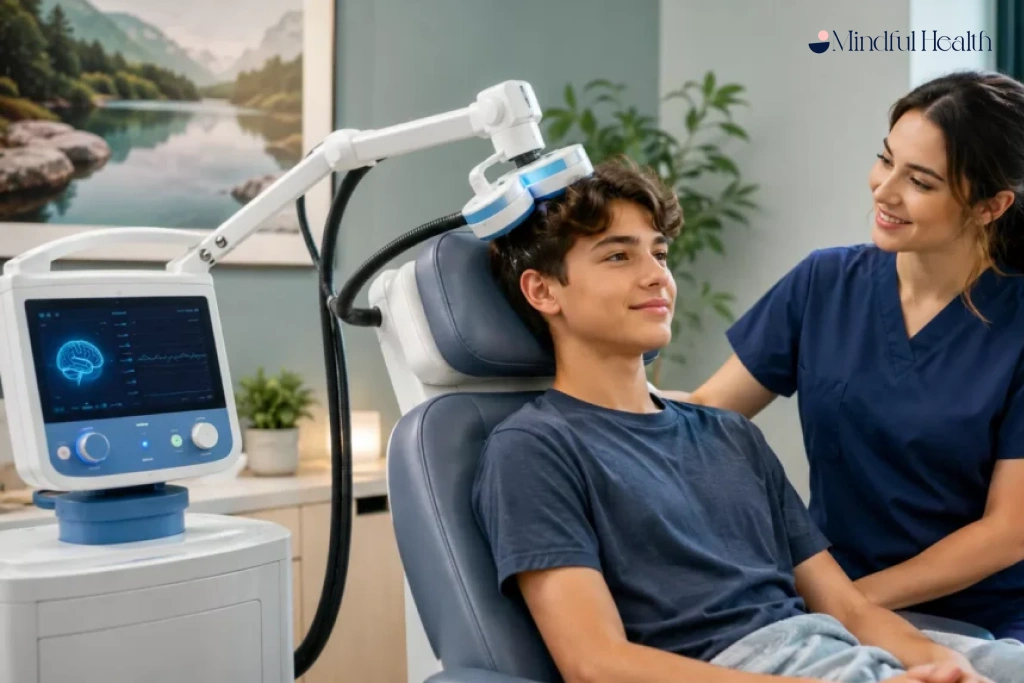
During each session, controlled magnetic pulses are delivered through a specialized coil placed against the scalp to stimulate targeted brain regions.
Unlike surgical procedures or treatments that require sedation:
- TMS does not require anesthesia
- No sedation is used
- No hospital stay is necessary
- Patients remain awake throughout treatment
How Does TMS for Adolescents Work?
TMS therapy is a noninvasive treatment designed to stimulate specific brain regions associated with mood regulation and emotional functioning.
For adolescents experiencing depression or other mental health concerns, TMS may provide an additional treatment option without relying exclusively on medication.
Targeting Mood-Related Brain Areas
TMS uses repeated magnetic pulses to stimulate brain regions involved in emotional regulation, mood, and cognitive functioning.
In some adolescents with depression, certain brain regions may show altered activity that is associated with persistent emotional and behavioral symptoms.
Noninvasive Treatment Process
During a TMS session, a magnetic coil is placed gently against the scalp near the forehead.
The coil delivers magnetic pulses to targeted areas of the brain without requiring surgery, anesthesia, or sedation.
Personalized Treatment Planning
Clinicians develop individualized treatment plans based on the adolescent’s symptoms, medical history, previous treatment response, and comprehensive mental health evaluation.
Sessions may occur several times per week over a period of several weeks, depending on the treatment plan and clinical recommendations.
Minimal Disruption to Daily Activities
Because TMS is noninvasive and does not require sedation, adolescents can generally resume their regular daily activities after each session.
They may continue attending school, spending time with family, and participating in many of their usual activities.
This can make treatment easier to incorporate into the lives of adolescents balancing school and other responsibilities.
Gradual Symptom Improvement
TMS does not typically produce immediate improvement after a single session.
Some adolescents may experience gradual changes in mood, motivation, attention, emotional stability, and daily functioning as treatment progresses under professional supervision.
Mental Health Conditions TMS May Help Address
Before recommending TMS therapy, mental health professionals evaluate symptoms, emotional functioning, medical history, and previous treatments to determine whether TMS may be appropriate.
Conditions that may be considered include:
Major Depressive Disorder (MDD)
TMS may be considered for adolescents and young adults experiencing Major Depressive Disorder (MDD).
When standard treatment has not provided sufficient improvement, persistent symptoms may include low mood, reduced interest in usual activities, difficulty concentrating, emotional withdrawal, and changes in daily functioning.
In appropriate cases, TMS may be considered as part of a broader treatment plan.
Treatment-Resistant Depression
Some adolescents continue to experience depressive symptoms after participating in therapy or taking antidepressant medication.
When standard treatments do not provide consistent relief, TMS may be considered as an additional treatment option.
Its noninvasive nature may make it appealing to families seeking alternatives or additions to medication-based care.
Anxiety Symptoms Associated With Depression
Depression may occur alongside anxiety symptoms such as persistent worry, emotional overwhelm, panic symptoms, irritability, and restlessness.
Treatment that addresses depression may also support improved emotional regulation and reduced anxiety-related distress in some adolescents.
Obsessive-Compulsive Disorder (OCD)
TMS has also received attention for its potential role in treating symptoms associated with obsessive-compulsive disorder.
Research continues to examine how targeted magnetic stimulation may help address unwanted thoughts, repetitive behaviors, persistent thought patterns, and other symptoms associated with OCD.
Mood Regulation and Emotional Stability Challenges
Some adolescents experience significant mood changes, low energy, irritability, emotional sensitivity, or difficulty managing emotions.
These concerns may affect school performance, relationships, and everyday functioning.
In selected cases, TMS may be incorporated into a broader treatment plan focused on emotional regulation and mood stability.
Benefits of TMS Therapy for Adolescents
Non-Medication Treatment Option
One potential benefit of TMS is that it provides a non-medication treatment option.
Some adolescents experience medication-related side effects such as fatigue, emotional blunting, weight changes, or difficulty concentrating.
TMS may offer an alternative approach for appropriate patients who are seeking additional treatment options.
Minimal Side Effects
TMS is generally associated with mild and temporary side effects.
Common side effects may include:
- Mild scalp discomfort
- Temporary headaches
- Lightheadedness
For many patients, these side effects are temporary and manageable.
No Sedation or Surgery
TMS does not require surgery, anesthesia, or sedation.
Adolescents remain awake during treatment and can generally return to their normal daily activities afterward with minimal interruption.
Potential for Sustained Symptom Improvement
Some patients may experience sustained improvement after completing a full course of TMS treatment.
The degree and duration of improvement can vary depending on the individual and their overall treatment plan.
Improved Daily Functioning
When symptoms improve, adolescents may also experience positive changes in areas such as:
- School performance
- Energy levels
- Social engagement
- Sleep quality
- Focus and concentration
- Motivation
What Families Should Expect During TMS Treatment
Understanding what happens during TMS treatment can help parents and adolescents feel more informed and prepared.
Initial Mental Health Evaluation
Mental health professionals first determine whether TMS may be appropriate by reviewing:
- Symptom history
- Previous treatments
- Current mental health status
- Medication response
- Emotional functioning
Personalized Treatment Planning
TMS treatment plans are developed around each person’s mental health needs, symptom severity, medical history, and individual treatment goals.
Structured Treatment Sessions
A typical TMS treatment course may involve multiple sessions per week over several weeks.
The exact schedule depends on the treatment protocol and individual clinical needs.
Ongoing Progress Monitoring
Throughout treatment, mental health professionals monitor changes in symptoms, emotional functioning, treatment response, and overall progress.
This allows the treatment team to evaluate how well the individual is responding and make adjustments when appropriate.
Common Misconceptions About TMS for Adolescents
Some families may have misconceptions about TMS because it is less familiar than traditional therapy or medication.
Understanding how the treatment works can help reduce unnecessary concern.
TMS Is Not Electroconvulsive Therapy
TMS is different from electroconvulsive therapy (ECT).
TMS uses targeted magnetic pulses and does not require anesthesia or intentionally induce a seizure.
TMS Does Not Change Personality
TMS is intended to support mood regulation and emotional functioning.
It is not designed to change a person’s identity, personality, or core characteristics.
TMS Is Not an Immediate Treatment
TMS typically works gradually through repeated sessions rather than producing immediate changes after a single treatment.
Progress is usually monitored throughout the full course of care.
Conclusion
Watching a teenager experience depression, emotional withdrawal, anxiety, or limited improvement from previous treatments can be difficult for any family.
Some adolescents continue to experience significant symptoms even after participating in therapy, taking medication, or trying multiple treatment approaches.
For appropriate patients, TMS may provide an additional noninvasive treatment option as part of a broader mental health care plan.
Mindful Health provides TMS care designed to support adolescents and families experiencing mental health challenges. Our approach focuses on personalized treatment, emotional well-being, and long-term support.
Through teen psychiatry, outpatient treatment, therapy, and noninvasive TMS care, Mindful Health helps families explore treatment options for adolescents experiencing depression and related mental health concerns.
Our goal is to provide structured, individualized support that promotes healthier emotional functioning and improved daily well-being.
