



When depression doesn’t budge even after trying antidepressants, it’s genuinely discouraging. This is what’s known as treatment-resistant depression, or TRD, and it affects a lot of people who keep dealing with symptoms even after doing everything “right” with medication. The good news is mental health care has moved past just cycling through pills.
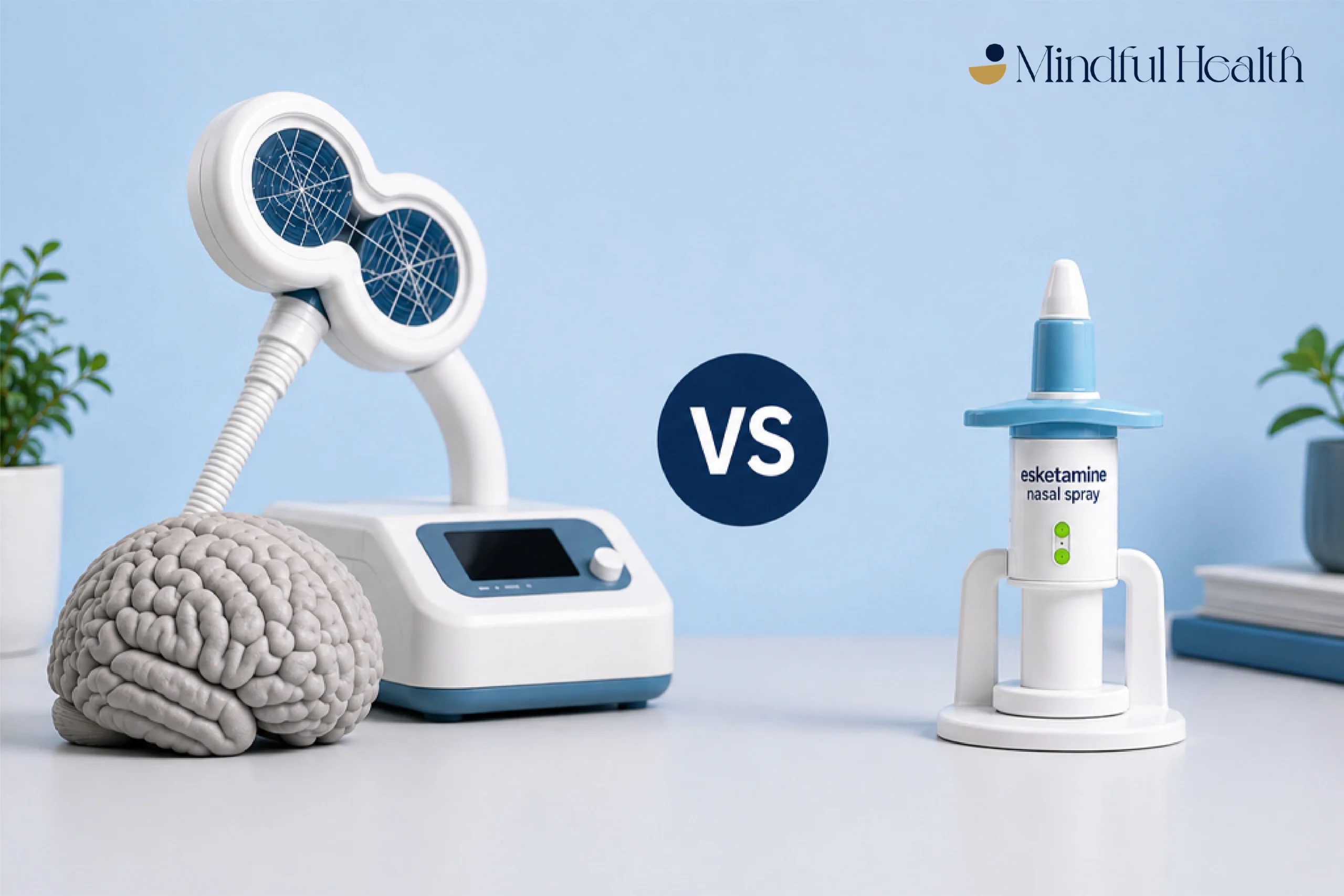
Two of the more effective, evidence-backed options now are Transcranial Magnetic Stimulation (TMS) and Spravato (esketamine). Both are built for treatment-resistant depression, but they work in completely different ways, come with different benefits, and honestly fit different people.
Understanding how they differ can help you actually have a useful conversation with your provider about what fits your symptoms, history, and goals.
What Is Treatment-Resistant Depression (TRD)?
TRD basically means major depressive disorder that hasn’t responded well enough after trying at least two antidepressants, taken at the right dose, for long enough to actually work. According to the National Institute of Mental Health (NIMH), treatment-resistant depression occurs when a person does not improve after trying at least two antidepressants. Antidepressants help a lot of people, but some people keep dealing with symptoms that mess with work, relationships, sleep, and life in general.
TRD doesn’t mean nothing will work. It just means it’s time to look at other approaches. TMS and Spravato have opened up real options for people who haven’t gotten meaningful relief from medication alone. Both are used for specific patients with TRD and usually come recommended after a full psychiatric evaluation, not as a first stop.
Understanding TMS Therapy
TMS is a non-invasive treatment that uses focused magnetic pulses to stimulate parts of the brain tied to mood regulation. The National Institute of Mental Health describes repetitive TMS as a noninvasive brain stimulation therapy that uses repeated magnetic pulses to stimulate neurons and neural circuits in the brain. It’s usually recommended for people with TRD who haven’t gotten enough relief from antidepressants alone. There’s no surgery, no anesthesia, and no sedation involved, patients stay fully awake through each session and can usually go right back to their normal day afterward.
How It Works
TMS uses gentle magnetic pulses to reach a brain area, the prefrontal cortex, that is closely linked to depression. Those pulses activate brain cells that are underactive and enhance communication between networks in the brain that control thoughts, feelings and mood.
Key Benefits
TMS brings real advantages for the right patients, especially anyone looking for something beyond medication alone.
- Non-invasive procedure
- No anesthesia required
- No systemic medication effects
- Minimal recovery time
- Outpatient treatment
- Can be combined with ongoing therapy
Understanding Spravato Treatment
Spravato (esketamine) is an FDA-approved prescription nasal spray used to treat adults with treatment-resistant depression. The FDA prescribing information for Spravato identifies esketamine nasal spray as a treatment for TRD in adults and requires administration under healthcare-provider supervision. Where regular antidepressants can take weeks to show any real effect, Spravato works through a different pathway in the brain and can bring relief faster for some people. Because of the safety requirements involved, it only gets administered at certified healthcare facilities, under medical supervision, no exceptions.
How It Works
Spravato targets the brain’s glutamate system rather than serotonin or norepinephrine. By affecting glutamate receptors, it helps strengthen neural connections tied to mood, offering a genuinely different route for people whose depression hasn’t budged with conventional antidepressants.
Key Benefits
For the right patients, Spravato brings a few real advantages as part of a broader depression treatment plan.
- FDA-approved for TRD
- Different mechanism of action
- Administered under medical supervision
- May be used as part of a personalized depression treatment plan
- May benefit medication-resistant cases
- Personalized treatment protocol
TMS vs Spravato: Key Differences to Make an Informed Choice
While both TMS and Spravato can be effective for many individuals with treatment-resistant depression, they’re very different in terms of the way they work, their administration, and what to expect during treatment. Understanding these nuances can assist you and your provider in determining which one is best suited to your history, lifestyle, and goals.
Treatment Approach
TMS uses targeted magnetic pulses on specific brain regions tied to mood. Spravato’s a nasal spray that works through the glutamate system instead. Both aim at the same outcome, fewer depressive symptoms, just through different biological routes.
Treatment Procedure
TMS is non-invasive and outpatient, and you’re awake the whole time. Spravato’s a nasal spray given under supervision at a certified center, followed by a required observation period after every session. The FDA notes that patients receiving esketamine are monitored in a certified healthcare setting because sedation and dissociation can occur after treatment.
Treatment Schedule
TMS usually means multiple sessions a week for several weeks, then tapering to maintenance if needed. Spravato follows its own structured schedule too, starting more frequently and gradually spacing out based on how you’re responding and what your physician recommends.
Side Effects
TMS tends to come with mild stuff, temporary scalp discomfort or headaches. Spravato can bring short-term dizziness, nausea, sleepiness, higher blood pressure, or dissociation, which is exactly why patients get monitored after every session. FDA prescribing information lists dissociation, dizziness, nausea, sedation, increased blood pressure, and other temporary effects among commonly reported reactions.
Recovery Time
After a TMS session, most people head straight back to work, school, or whatever’s next on their day. Spravato needs post-treatment observation, and you’ll need someone to drive you home since you shouldn’t be driving until the next day. The FDA advises patients not to drive or operate machinery until the next day after a restful sleep.
Effectiveness
Both treatments have shown real results for many people with TRD. What actually works best depends on things like how you’ve responded to past treatment, your overall health, and how severe your symptoms are, not some universal ranking of one over the other.
Long-Term Treatment
Some people get lasting improvement after finishing treatment. Others do better with maintenance sessions or additional therapy layered in. Long-term planning gets built around you specifically, through regular follow-up with your provider.
Which Treatment May Be Right for You?
There’s no single answer that fits everyone with TRD. What’s best depends on your symptoms, how you’ve responded to antidepressants before, your medical history, lifestyle, and honestly your own preferences too. A full psychiatric evaluation is what actually pins down which option offers the most benefit for you specifically.
TMS May Be a Better Option If You:
- Prefer a non-invasive treatment
- Want to avoid additional medications
- Have experienced medication side effects
- Need to return to daily activities immediately after treatment
- Are comfortable attending multiple outpatient sessions each week
Spravato May Be a Better Option If You:
- Have treatment-resistant depression despite multiple medications
- Are an appropriate candidate for esketamine therapy
- Can attend monitored treatment sessions at a certified clinic
- Are comfortable with a nasal spray treatment as part of your depression treatment plan
- Have transportation available after each treatment session
Can TMS and Spravato Be Part of a Personalized Treatment Plan?
TRD hits everyone differently, which is exactly why a one-size-fits-all approach rarely works. Depending on your evaluation, a psychiatrist might recommend TMS, Spravato, adjusting your medication, therapy, or some combination built specifically around your situation.
Ongoing monitoring also means that your plan may change as your symptoms improve or your needs change. A personalized approach not only increases your chances of feeling better but can also help you feel better long-term by treating the physical and psychological aspects of depression.
Conclusion
If you’ve gone through treatment-resistant depression, you may feel like you’ve tried everything, but treatment-resistant depression does not mean that you have no options! Both TMS and Spravato are promising treatments in the fight against depression, offering hope to individuals who have not found relief through standard therapy.
At Mindful Health, treatment starts with actually understanding your experience, not just writing another prescription. Our psychiatric team conducts full evaluations and builds personalized plans that may include TMS therapy, Spravato, medication management, psychotherapy, or a mix of evidence-based treatments built around you. With genuine care, ongoing support, and a real commitment to long-term recovery, Mindful Health helps people move past treatment resistance and take real steps toward a better quality of life.
