



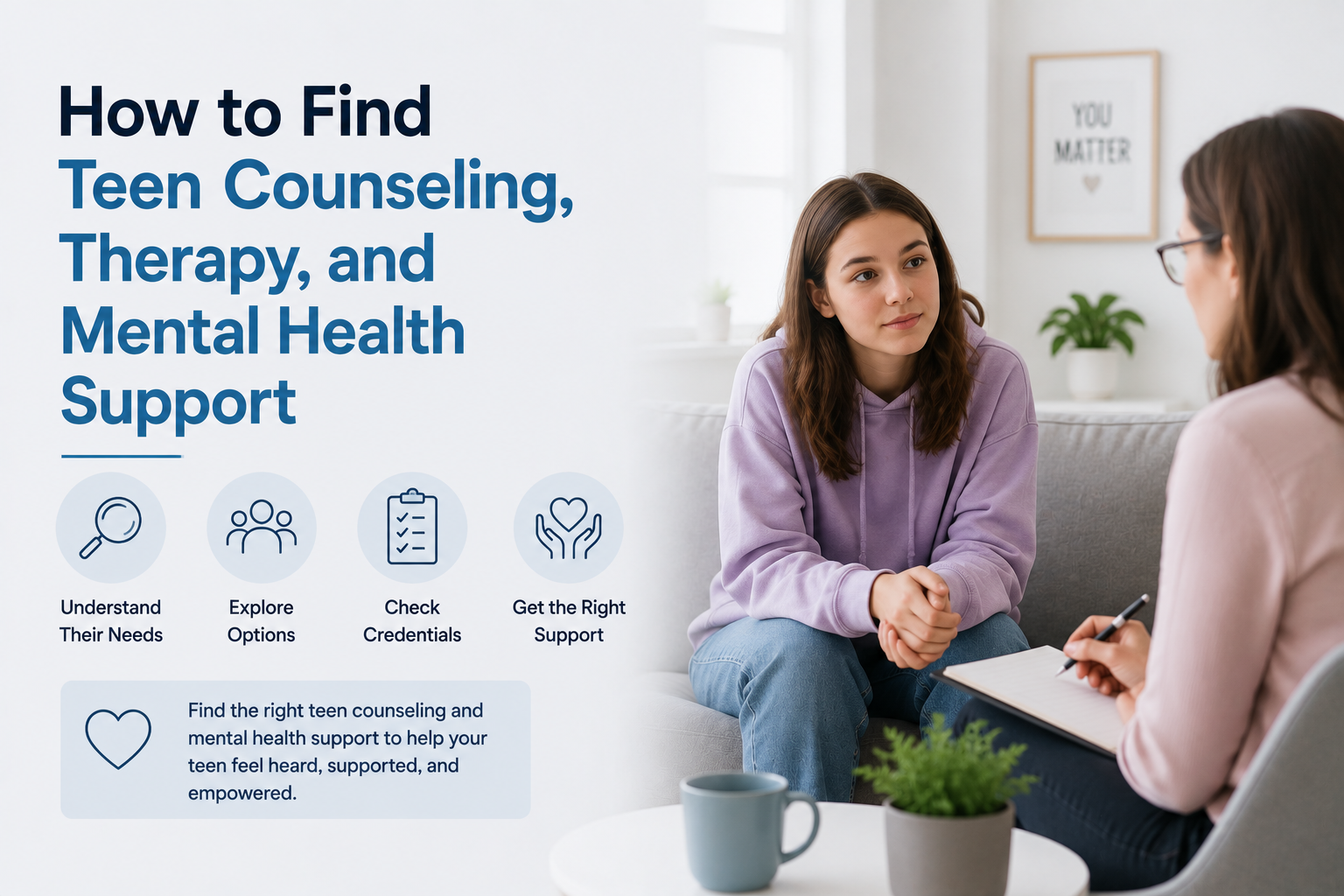
Raising a teenager isn’t easy. Between rapid physical changes, emotional ups and downs, shifting friendships, and increasing academic demands, adolescence can be one of the most challenging stages of growing up. Most teens successfully navigate these changes. But some teens don’t, and they end up battling with anxiety, depression, stress, behavior problems, trauma, or just rough relationships that wear them down.
According to the Centers for Disease Control and Prevention (CDC), teen mental health struggles have been increasing for years now. So early intervention isn’t optional anymore, it’s just smart. The right counseling or therapy can help teens develop healthy coping skills, feel more like themselves again, and prevent smaller struggles from turning into bigger ones.
Why Teen Mental Health Support Matters
Think about everything hitting a teenager suddenly. Grades. Friend drama. Family problems at home. Trying to figure out who they even are. And then there’s the phone in their pocket, feeding them comparisons all day long. No wonder so many teens feel stretched thin.
Good mental health support can help a teen:
- Manage anxiety and stress
- Improve emotional regulation
- Build self-confidence
- Develop healthy coping skills
- Strengthen relationships
- Address behavioral concerns
- Process trauma or difficult experiences
And a point to note is that the earlier you get their support, the better things tend to turn out down the road.
Benefits of choosing Teen Counseling, Therapy, and Mental Health Support
Think of it like fixing a small crack before it turns into a busted pipe. Early mental health support can help teens address emotional and behavioral challenges before they become more severe. Therapy gives them a safe place to talk, learn to cope, communicate better, and bounce back from a hard time instead of getting buried by it. Teens who get help early just tend to do better, both right now and years from now.
Helps Prevent Mental Health Issues From Worsening
The sooner you catch a problem, the smaller it usually stays. Wait too long, and it starts bleeding into exam grades, friendships, basically everything.
Builds Healthy Coping Skills for Life
This isn’t just about getting through high school. The skills a teen picks up in counseling, handling stress, dealing with peer pressure, and managing big emotions stick with them well into adulthood.
Improves Academic and Social Functioning
When a teen’s concentration improves, you see it everywhere. They focus better in class. They show up for friends. They actually want to participate rather than hide out.
Strengthens Emotional Resilience and Self-Esteem
Therapy helps teens understand what’s actually going on inside their own brains, and that kind of self-awareness builds confidence that carries them through whatever comes next.
Encourages Healthier Communication and Relationships
A teen who’s worked through their feelings in therapy tends to open up more at home, resolve conflicts rather than shut down, and build closer bonds with the people around them.
Signs a Teen May Benefit From Counseling or Therapy
Every teenager has bad days. That’s just being a teenager. But there’s a difference between a rough week and something that needs real attention.
Here’s what to watch for:
- Ongoing sadness or hopelessness
- Excessive worry or anxiety
- Withdrawal from friends and family
- Significant changes in sleep patterns
- Changes in appetite
- Declining academic performance
- Increased irritability or anger
- Loss of interest in activities
- Difficulty concentrating
- Self-harming behaviors
- Thoughts of suicide
If you’re seeing any of this, stick around, or if it’s getting in the way of your teen’s daily life, that’s your sign to get them evaluated by a professional.
Understanding Different Types of Teen Mental Health Support
Not every kind of support looks the same, and knowing your options makes a real difference.
Individual Therapy
Individual counseling is just you and a licensed therapist, one-on-one, where you express all your thoughts. Sessions focus on whatever’s weighing on emotional challenges, build coping strategies, and dig into personal growth at their own pace.
Family Therapy
Sometimes the issue isn’t just the teen; it’s the whole family dynamic. Family therapy pulls parents and other family members into the room so everyone can work on communication and rebuild trust together.
Psychiatric Evaluation and Medication Management
When symptoms are really disrupting daily life, a psychiatric evaluation can help figure out what’s going on and whether medication should be part of the picture, alongside everything else.
Intensive Outpatient Programs (IOP)
If weekly therapy alone isn’t cutting it, IOPs offer more structured support while your teen still gets to live at home and keep going to school.
Partial Hospitalization Programs (PHP)
PHPs step it up another notch for teens dealing with more serious symptoms, all while still avoiding full inpatient care whenever that’s the right call clinically.
How to Find the Right Teen Therapist
Finding the right person matters more than people realize. A good fit can change the whole trajectory of treatment.
Look for Appropriate Credentials
Make sure you’re looking at licensed professionals who have actual experience with teenagers, not just adults. Common types include:
- Licensed Professional Counselors (LPCs)
- Licensed Clinical Social Workers (LCSWs)
- Psychologists
- Psychiatrists
- Marriage and Family Therapists (MFTs)
Consider Specialization
Therapists aren’t one-size-fits-all. Depending on what your teen’s dealing with, look for someone who has real experience with:
- Depression
- ADHD
- Trauma
- Eating disorders
- Behavioral concerns
- Substance use issues
- Social difficulties
Evaluate Communication Style
Here’s something a lot of people overlook: the relationship between your teen and their therapist matters just as much as the therapist’s qualifications. If your kid doesn’t feel comfortable opening up, none of the rest of it works.
Verify Insurance and Costs
Costs can vary a lot from one provider to the next. Check what your insurance covers, who’s in-network, what payment plans exist, and whether there’s any financial help available before you commit to anything.
Questions Parents Can Ask When Choosing a Provider
Walking in with the right questions makes this whole process so much less overwhelming.
Try asking things like:
- What experience do you have working with teenagers?
- What treatment approaches do you use?
- How are parents involved in treatment?
- How do you measure progress?
- What should we expect during the first few sessions?
- Do you offer virtual or in-person appointments?
These answers will tell you pretty quickly whether this provider is the right match for your teen.
When to Seek Immediate Help
Some situations can’t wait for a Tuesday afternoon appointment. They need action right now.
Get help immediately if your teen:
- Expresses suicidal thoughts
- Engages in self-harm
- Experiences severe emotional distress
- Displays dangerous behavior toward themselves or others
- Shows signs of a mental health crisis
If you’re in that moment, call 911, reach out to emergency services, or call the 988 Suicide & Crisis Lifeline. Don’t wait on this one.
Conclusion
Getting your teen the right support can shape so much: how they feel about themselves, how their relationships go, and who they become down the line. Whether it’s anxiety, depression, stress, behavior issues, or something else entirely, stepping in early gives them a real shot at building the kind of resilience that lasts.
Mindful Health offers a full range of mental health services, including psychiatric care, therapy, medication management, Intensive Outpatient Programs (IOP), Partial Hospitalization Programs (PHP), TMS therapy, and more. By offering personalized treatment options and ongoing support, Mindful Health helps individuals and families access care tailored to their unique mental health

